Skip to content

Customer generation

solar panels and team walking on roof planning for inspection

Choose how to generate your own electricity

Customer generation allows you to produce renewable electricity either on your own property through self‑generation or through community generation. With community generation, you can have multiple people contribute to building a large system where you can all share the generation credits and reduce your bills.

Self-generation versus community generation

Understand the differences between the two available rates before you choose which to apply for.

Self-generation

Self‑generation lets you reduce your energy bill by producing renewable energy on-site for your home or business. You will be able to send up to 100 kW per phase of excess energy generation back to BC Hydro and earn monetary credits that will help reduce your bill.

If you choose this service option and are approved to connect, your account will be placed on the self-generation service rate (Rate Schedule 2289).

When you apply for self-generation, you can also apply for solar and battery rebates to help offset the cost of purchasing and installing a solar system.

Community generation

Community generation allows a community generator customer to build and operate a shared generating facility that serves their own load and distributes monetary credits for any excess generation to eligible subscribers. These benefitting customers do not receive electricity directly from the facility, and their electrical service remains unchanged.
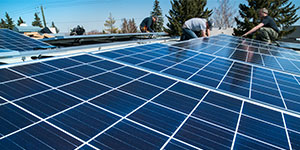
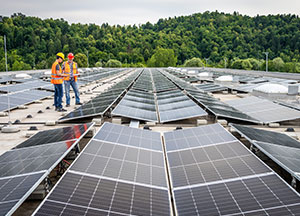
With community generation you can send up to 2 megawatt (MW) of extra generation back to BC Hydro, however the number and type of benefitting customers determine your allowance for what you can send back.

If you choose this service option and are approved to connect, your account will be placed on the community generation service rate (Rate Schedule 2290).

When applying for community generation, commercial and industrial customers who plan to install a system that will supply most of their own energy needs may also be eligible to apply for load displacement incentives.

How you're paid for generating electricity

You don’t get paid each time your system exports electricity to the BC Hydro grid. Instead, your meter measures how much energy (kWh) you export throughout your billing period. At the end of your billing period, all exported kWh is totaled, and BC Hydro applies a credit of $0.10 per kWh to your bill.

For example, if your system generates 3,500 kWh of outflow within your billing period, you will receive a credit of $350 on your bill (3,500 × $0.10 = $350).

Depending on your service, your system cannot export more than 100 kW for self-generation or 2 MW for community generation at any given moment.

Considerations for generating your own electricity

There are a few things you’ll need to consider before applying for self-generation or community generation.

  • Your electricity usage, also referred to as load.
  • The size of the system you plan to install, based on the roof or land area you have available
  • Whether your system will generate more electricity than you use
    • Most installers and contractors can help determine this
    • Alternatively, we can connect you with industry experts who can conduct a study for a fee

Explore which service is right for you

Net metering

BC Hydro is closing the net metering service rate (Rate Schedule 1289) to new customers. Effective July 1, 2026, a new self-generation service rate (Rate Schedule 2289) will apply. This is based on the decision made by the B.C. Utilities Commission (BCUC) on our net metering service rate application.

Customers currently on our net metering service rate (Rate Schedule 1289) will have 10 years from the initial net metering service start date to remain on this rate. Once those 10 years have passed, they will automatically be transferred to the self-generation service rate (Rate Schedule 2289).

You can learn more about the details of this rate change here